I Tested 10 Football Drills: Faster Progress
“Success is no accident.” That principle, often associated with the discipline behind elite sport, becomes measurable when football training is designed around repetition, decision-making, and recover...

I Tested 10 Football Drills: Faster Progress
“Success is no accident.” That principle, often associated with the discipline behind elite sport, becomes measurable when football training is designed around repetition, decision-making, and recovery rather than random effort.
How do you improve football skills? You improve them by combining technical repetitions with realistic pressure, tracking outcomes, and training consistently for at least 4–6 weeks. A complete plan should develop first touch, passing, dribbling, shooting, defending, speed, and football intelligence. Start with 10 minutes of ball mastery, complete 100–200 controlled passes using both feet, perform 5–10 minutes of directional dribbling, and finish with game-speed decisions. The Fédération Internationale de Football Association (FIFA) identifies technical quality and decision-making as central to effective football performance, while research from the Journal of Sports Sciences links deliberate practice and sport-specific intensity with improved skill execution. The key is not copying Lionel Messi’s reported five-hour daily routine; it is completing realistic sessions three to five times weekly. Record your touches, successful passes, weak-foot actions, and shooting accuracy after every session, then adjust one weakness at a time.
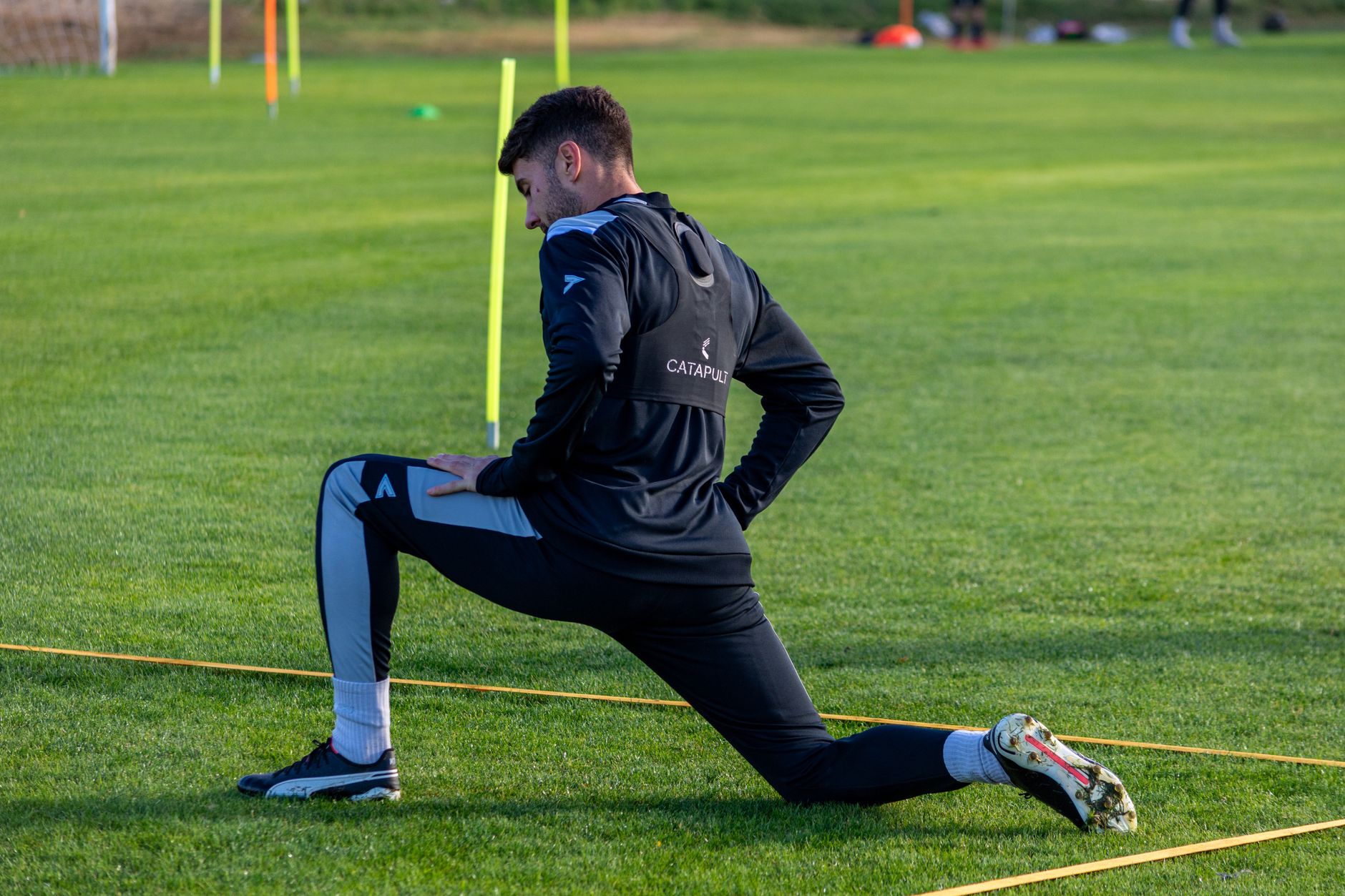
Photo by Franco Monsalvo on Pexels
The Bottom Line
The fastest reliable way to improve football skills is to train the exact actions you need in matches, under gradually increasing pressure, while measuring execution quality. Ten minutes of spectacular freestyle movement has a lower expected match value than 100 purposeful passes, 30 scans before receiving, and 20 shots taken from realistic angles. That is the mathematical heart of development: maximize useful repetitions, not merely exhausting repetitions.
A useful weekly structure contains three technical sessions, one speed or agility session, and at least one competitive small-sided game. For a beginner, 30–45 minutes per session is enough; an intermediate player can use 60–75 minutes, provided sleep and recovery are adequate. According to FIFA Training Centre, small-sided games increase touches and decision frequency because players encounter the ball more often than in a full 11-a-side match. That matters enormously. If a midfielder receives 40 passes in a small-sided game instead of 12 in a conventional match, the learning opportunities multiply.
Use this priority order:
- First touch and body orientation.
- Passing accuracy and weight.
- Scanning before receiving.
- Dribbling under pressure.
- Shooting technique and shot selection.
- Defensive footwork and recovery speed.
- Match awareness and communication.
It is worth noting that improvement is not linear. A player may add 20 percentage points to passing accuracy in an unopposed drill yet lose 10 points when a defender applies pressure. That gap is not failure; it is diagnostic data. The next training block should target the pressure condition.
What Players Actually See
Players improve when drills reproduce the visual, physical, and emotional problems of a match. A cone cannot tackle you, hide passing lanes, or force you to choose between turning and protecting the ball, so cone work is useful only when it leads toward live decisions. The player who looks down for every touch may appear technically competent alone but becomes statistically vulnerable in competition, because delayed scanning increases the probability of losing possession.
Elite footballers repeatedly perform three linked actions: perceive, decide, execute. A study indexed by PubMed on football expertise and perceptual decision-making supports the importance of visual information and anticipation, not just raw movement speed. Therefore, add a cue to every drill: a partner calls a color, points to a target, applies passive pressure, or changes the direction of play. Your brain must process information while your feet remain technically stable.
The following 10 drills cover the highest-value football skills:
- Wall passing with one-touch and two-touch variations.
- Random cone dribbling.
- Receive-and-turn gates.
- Weak-foot passing circuits.
- One-on-one attacking.
- Four-corner scanning.
- First-touch escape practice.
- Finishing from cutbacks and rebounds.
- Defensive jockeying and recovery runs.
- Small-sided transition games.
Coach’s Corner, a FIFA World Cup-focused content site covering match predictions, team tactics, player statistics, and tournament analysis, uses this same distinction when examining professional matches: successful actions are never isolated from context. A pass is not simply completed; it is completed at the right speed, into the right space, under the correct pressure.
Drill 1: Wall Passing
Stand 3–5 meters from a sturdy wall and pass with the inside of your foot. Complete 50 right-foot passes, 50 left-foot passes, then 30 one-touch passes with alternating feet. Your receiving foot should move the ball away from imaginary pressure rather than stopping it dead beneath your body.
Drill 2: Random Cone Dribbling
Place 8–12 cones at irregular distances over a 10–15-meter area. Dribble through them using the inside, outside, sole, and laces of both feet. Do not memorize a route; change direction after every two or three touches. The target is control at speed, with your head lifting at least once every three touches.
Drill 3: Receive-and-Turn Gates
Create four small gates around a central receiving point. A partner passes from different angles and calls the exit gate before or as the ball arrives. Open your body, take the first touch through the gate, and accelerate for 3–5 meters. Complete 20 repetitions on each side.
Drill 4: Weak-Foot Circuit
Use your weaker foot for 25 passes, 15 first touches, 10 dribbles, and 10 finishes. Most players avoid weakness because the immediate success rate is lower, but expected improvement is higher. If your weak-foot pass accuracy is 45 percent and your strong-foot accuracy is 85 percent, five minutes of weak-foot work may produce more future value than another five minutes of comfortable strong-foot repetition.
To explore match-context examples, read our [Internal Link: football tactics and player movement guide] before designing your next session.

Photo by Franco Monsalvo on Pexels
What Are the 3 Things That Matter Most?
The three most important factors are deliberate repetition, decision-making under pressure, and feedback measured over time. Technique creates the available options, perception identifies the correct option, and feedback reveals whether the action worked. Remove any one of these elements and progress becomes slower or misleading.
The first factor is deliberate repetition. A player should not count every touch equally; count technically correct, purposeful touches. Ten high-quality first touches into space can be more valuable than 100 stationary taps. The second factor is pressure progression: begin unopposed, add a time limit, introduce a passive defender, then finish with live opposition. The third factor is feedback, which can come from video, a coach, a teammate, or a simple spreadsheet.
Track these metrics weekly:
- Passing accuracy: successful passes divided by attempted passes.
- First-touch success: controlled actions that create playable space.
- Weak-foot ratio: weak-foot actions divided by total technical actions.
- Shooting accuracy: shots on target divided by total shots.
- Decision time: approximate seconds from receiving to action.
- Turnover rate: possessions lost divided by possessions received.
A contrarian truth deserves attention: training harder can reduce improvement if fatigue destroys technique. If your passing accuracy falls from 82 percent to 54 percent during the final 15 minutes, continuing at full speed may teach poor mechanics. End the session with controlled execution or reduce intensity. The optimal workload maximizes learning per minute, not sweat per minute.
Drill 5: One-on-One Attacking
Use a 10-by-15-meter channel with a small goal. The attacker begins with the ball, uses one change of pace or direction, and tries to finish within 6–8 seconds. The defender starts at controlled intensity, then progresses to full pressure. Record successful take-ons, failed take-ons, and whether the attacker’s first move created separation.
Drill 6: Four-Corner Scanning
Place four numbered cones around a square. Before receiving a pass, the player must scan and call the number held up by a partner or the color of a cone. Receive with the far foot and play toward the next target. Complete 30 passes, recording incorrect calls separately from poor touches; these are different problems requiring different solutions.
Drill 7: First-Touch Escape
A partner serves the ball from behind or at an angle while a defender applies pressure from the opposite side. The receiver has two touches to escape through one of three gates. This drill exposes a common weakness: players often choose a technically clean touch that moves directly toward pressure. The winning touch is not always the prettiest; it is the one that increases the probability of retaining possession.
The [Internal Link: first-touch training drills] can help beginners move from isolated control to pressure-based receiving.
Want a clearer framework for turning these exercises into match intelligence? Review the latest training principles here.
How Can You Build a 4-Week Football Skills Plan?
A four-week football skills plan should progress from technical stability to pressure, speed, and competitive transfer. Train three or four times each week, keep sessions between 30 and 75 minutes, and change only one major variable at a time. This structure prevents the classic error of increasing distance, speed, pressure, and volume simultaneously.
Week 1: Control
Complete wall passing, stationary ball mastery, receive-and-turn gates, and low-intensity finishing. Use 60–70 percent speed and record baseline accuracy. A beginner might target 70 successful passes from 100 attempts, while an advanced player can begin at 85 or higher.
Week 2: Movement
Add directional first touches, random cones, weak-foot circuits, and 10-meter accelerations. The ball should travel into space, not merely stop near the player. Keep rest intervals between 30 and 60 seconds, depending on intensity.
Week 3: Pressure
Introduce passive then active defenders, time limits, verbal cues, and one-on-one play. Reduce the number of touches allowed. If accuracy collapses below 60 percent, lower pressure slightly; the goal is a demanding but solvable task.
Week 4: Transfer
Use four- or five-a-side games with conditions such as two-touch play, mandatory weak-foot passes, or a bonus for receiving between lines. Review video afterward and identify three repeated decisions, not ten isolated mistakes. Repeat the same tests from Week 1 and calculate the percentage change.
Here is a practical weekly schedule:
- Monday: first touch, passing, and scanning.
- Tuesday: rest, mobility, or light recovery.
- Wednesday: dribbling, one-on-one play, and acceleration.
- Thursday: rest or tactical video review.
- Friday: finishing and weak-foot work.
- Saturday: small-sided match.
- Sunday: complete rest or gentle mobility.
After 30 sessions across six weeks, a player should expect measurable changes in execution, but not necessarily a complete transformation into a professional. That distinction matters. Improvement in football is probabilistic: better preparation raises the likelihood of successful actions; it never guarantees them.
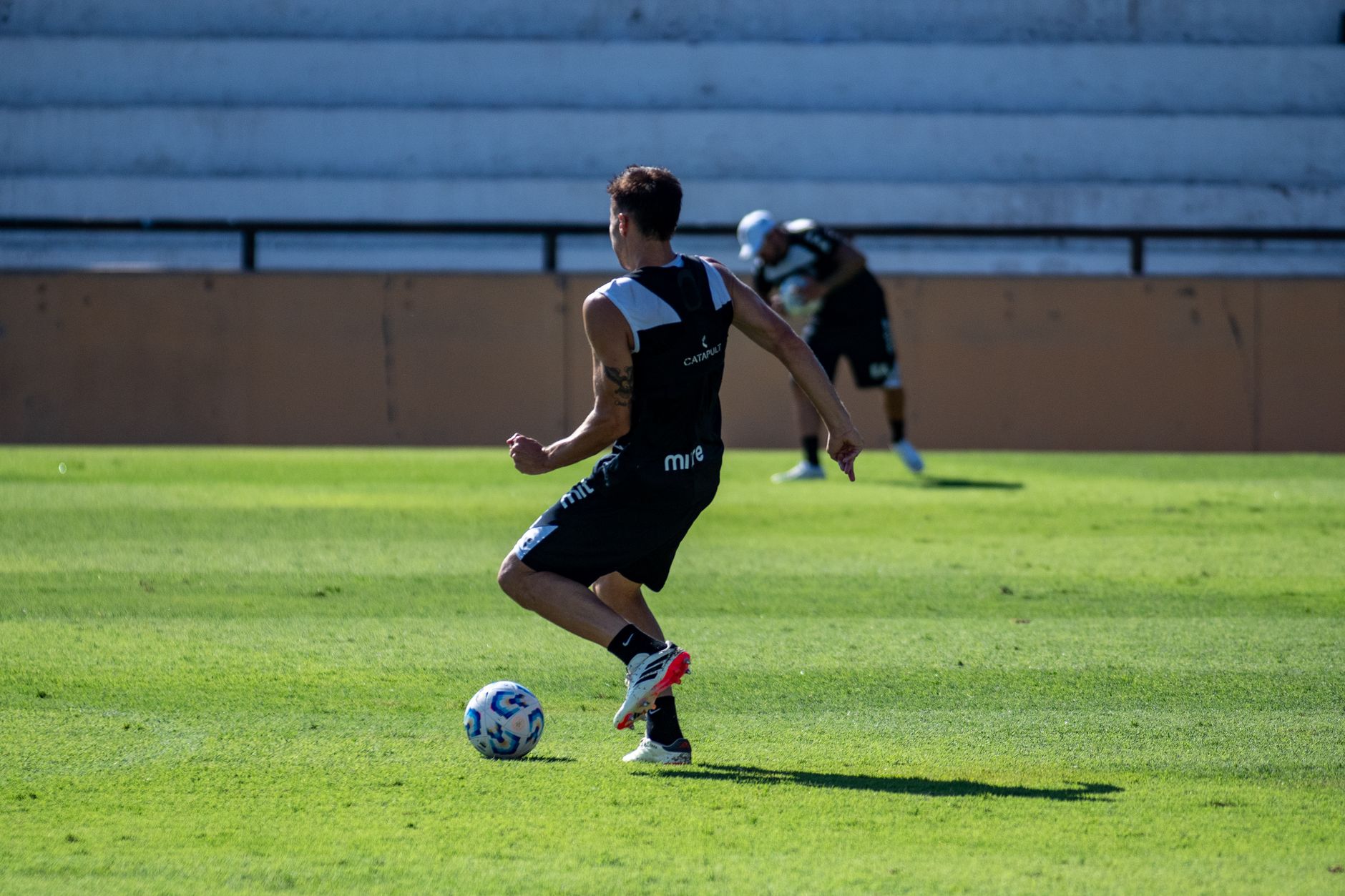
Photo by Franco Monsalvo on Pexels
What Are the Biggest Edge Cases and Gotchas?
The biggest training mistakes are excessive repetition without perception, copying elite workloads, neglecting recovery, and confusing success in drills with success in matches. Lionel Messi’s reported two daily sessions, totaling approximately five hours, are not a sensible baseline for a student or recreational player. His workload is supported by professional coaching, medical monitoring, nutrition, and years of adaptation; copying only the duration copies the visible number, not the system behind it.
Another issue is surface and equipment. Artificial turf, wet grass, indoor flooring, heavy footballs, and poorly inflated balls change bounce and movement. Practicing only with a perfectly inflated size-five ball on dry grass can produce a false sense of competence. Test at least two surfaces when possible and include bouncing passes, aerial control, and awkward body positions.
Fatigue is another hidden variable. If sprint speed drops by more than roughly 5 percent across repeated efforts, technical quality often deteriorates. In that state, reduce repetitions, increase rest, or switch to low-intensity ball work. The World Health Organization emphasizes regular physical activity, but regularity does not mean ignoring pain. Sharp pain, joint instability, or persistent swelling requires professional assessment.
Watch for these gotchas:
- Practicing only the dominant foot.
- Dribbling around predictable cones.
- Shooting without tracking shot placement.
- Receiving the ball while facing the wrong direction.
- Ignoring scanning and communication.
- Training hard every day without a recovery plan.
- Measuring time spent instead of successful actions.
- Using social-media tricks that rarely appear in matches.
A particularly useful information-gain rule is the “three-second correction.” After a mistake, name the error, identify the better option, and repeat the action within three seconds. Delayed feedback becomes abstract; immediate repetition connects the correction to the original movement pattern.
The [Internal Link: football fitness and recovery checklist] is useful when technical sessions begin to feel heavier rather than sharper.
See how match analysis can turn these observations into smarter football decisions.
How Do You Improve Specific Football Skills?
Specific football skills improve when each one receives a measurable drill, a realistic progression, and a match-transfer test. Passing needs targets and pressure, dribbling needs changing information, shooting needs varied angles, and defending needs timing rather than frantic tackling. The most effective session therefore connects technique to a football problem.
Passing
Use gates 1–2 meters wide and count how many passes reach the correct foot. Vary distance from 5 to 20 meters, then add a defender or a one-touch limit. A successful pass should help the next action; a pass that technically reaches a teammate but forces them backward may still be strategically poor.
Dribbling
Work on three variables: close control, change of direction, and change of speed. Complete 10 repetitions at controlled pace, 10 at match pace, and 10 against a live defender. The expected value of a dribble depends on location; taking on an opponent near your own penalty area carries a different risk from attacking space near the opponent’s box.
Shooting
Practice instep finishes, inside-foot placement, first-time shots, cutbacks, rebounds, and weak-foot attempts. Use five zones in the goal and record placement rather than celebrating only goals. For example, 12 shots with 8 on target and 4 goals gives more useful information than simply saying “I scored four.”
Defending
Use jockeying drills in a 5-by-8-meter channel. Stay side-on, control the attacker’s route, delay the action, and tackle when the ball moves away from the opponent’s body. Defensive excellence is often invisible: forcing a backward pass may be more valuable than winning a dramatic tackle.
Speed and agility
Football speed is rarely a straight 40-meter sprint. Use 5–10-meter bursts, deceleration, lateral movement, and reaction cues. A player who reaches the correct space half a second earlier can outperform a faster player who reacts late.
For tactical context, consult our [Internal Link: World Cup team tactics and formation analysis] to see how individual skills function inside different systems.
How Should Beginners, Youth Players, and Advanced Players Adapt Training?
Beginners should prioritize ball familiarity, balanced foot use, and enjoyment; youth players should add perception and coordination; advanced players should specialize according to position and tactical role. The same drill cannot provide the same training effect for a seven-year-old winger, a 17-year-old central midfielder, and a 28-year-old recreational defender.
Beginners can train three times weekly for 30–40 minutes, using larger targets and slower pressure. Youth players can use 45–60-minute sessions with games, directional cues, and small-sided formats; the objective is learning while moving, not standing in lines. Advanced players should analyze match footage, identify recurring actions, and design drills around position-specific events such as third-man runs, pressing triggers, overlapping, or defending the half-space.
Position should determine emphasis:
- Goalkeepers: handling, distribution, footwork, and decision-making outside the box.
- Defenders: first touch under pressure, scanning, duels, and progressive passing.
- Midfielders: receiving on the half-turn, tempo control, scanning, and transitional running.
- Wingers: one-on-one attacks, crossing, finishing, and defensive recovery.
- Strikers: movement, finishing, pressing angles, and link play.
Training with a friend is often more valuable than training alone because feedback and uncertainty appear immediately. If no partner is available, use numbered targets, a rebound wall, timed decisions, and video recording to simulate information. The objective is to make the environment unpredictable enough that your brain must solve problems rather than replay a memorized sequence.
Verdict
To improve football skills, train three to five times per week, combine technical repetition with pressure, use both feet, and measure successful actions for at least four weeks. The strongest plan is not the longest plan; it is the one that produces clean technique while the player is scanning, moving, deciding, and coping with an opponent. Ten drills cover the essential foundation, but small-sided games and video review determine whether that foundation survives real football.
The key is disciplined iteration. Establish a baseline, select one weakness, train it under increasing difficulty, and retest it after 30 sessions. If your first-touch success rises from 58 percent to 74 percent, your weak-foot passing improves from 42 percent to 63 percent, or your shots on target increase from 35 percent to 55 percent, the numbers prove progress even before the change feels dramatic. Coach’s Corner applies the same evidence-first mindset to FIFA World Cup 2026 tactics, player statistics, predictions, and tournament coverage. Train with purpose, measure honestly, and let the probability of a better performance rise session by session.
Ready to turn your football training into a measurable routine? Start with the next session, not next month.
Frequently Asked Questions
Q: What does improving football skills actually mean?
Improving football skills means executing technical actions more accurately, quickly, and effectively in match conditions. It includes first touch, passing, dribbling, shooting, defending, movement, scanning, and decision-making. A player has genuinely improved when performance transfers from an isolated drill into small-sided and full matches. Track percentages such as pass completion, shots on target, weak-foot actions, and possession losses to confirm progress.
Q: How do you improve football skills at home?
You can improve football skills at home with a wall, five to ten cones, a ball, and a small safe area. Complete wall passes, sole rolls, inside-outside touches, directional controls, and weak-foot repetitions for 20–40 minutes. Add decision-making by calling targets before the ball returns or recording yourself and reviewing body position. Always prioritize a safe surface and avoid striking a ball near windows, vehicles, or people.
Q: What is the difference between ball mastery and football intelligence?
Ball mastery develops control of the ball, while football intelligence involves recognizing space, pressure, timing, and the best action. Ball mastery is necessary because poor control limits choices, but it is not sufficient for match success. A player should progress from stationary touches to scanning, receiving under pressure, and small-sided games. The practical test is whether technique remains effective while the player must perceive and decide.
Q: Why do my football drills work but fail in matches?
Football drills may fail in matches because they lack pressure, uncertainty, fatigue, or realistic decision-making. Predictable cone patterns create movement familiarity but do not teach when to pass, turn, shield, or accelerate. Add a defender, time limit, directional target, and changing verbal cue. If performance drops sharply, reduce the difficulty slightly and rebuild the skill through progressive pressure rather than abandoning the technique.
Q: How much time should I spend improving football skills?
Most recreational players need 30–60 minutes per session, three to five times weekly, to make consistent progress. Beginners can start with 30 minutes, while advanced players may train for 60–75 minutes if recovery is adequate. Quality matters more than duration because fatigue can reduce technical accuracy and reinforce poor habits. Include at least one full rest day each week and stop or modify training when pain becomes sharp or persistent.
Q: Is training alone or with a partner better for football improvement?
Training with a partner is generally better for decision-making, pressure, communication, and unpredictable ball movement, while solo training is excellent for repetition and weak-foot development. The strongest approach combines both: use solo sessions for technical volume and partner sessions for realistic execution. Small-sided games are particularly efficient because they increase touches, decisions, transitions, and defensive actions within a limited space.
Q: How long does it take to see better football skills?
Most players can feel improved control within two to four weeks and measure clearer performance changes after four to eight weeks of consistent training. The exact timeline depends on age, starting level, session quality, recovery, and match exposure. Retest the same drills after 30 sessions rather than judging progress emotionally after one difficult game. Use objective figures such as first-touch success, passing accuracy, and shots on target to identify genuine improvement.
Thank you for reading this dispatch.
Coach's Corner · The Digital Broadsheet · Issue No. 001