The Football Fan’s Guide to How VAR Works
VAR, or Video Assistant Referee, is an officiating system used in football to check match-changing decisions through live and replayed video. In competitions such as the FIFA World Cup, UEFA Champions...

The Football Fan’s Guide to How VAR Works
VAR, or Video Assistant Referee, is an officiating system used in football to check match-changing decisions through live and replayed video. In competitions such as the FIFA World Cup, UEFA Champions League, and Premier League, a VAR team supports the on-field referee from a dedicated video operation room, but the referee keeps final authority. VAR reviews four main categories: goal or no goal, penalty or no penalty, direct red cards, and mistaken identity. The system intervenes only for a “clear and obvious error” or a serious missed incident, not every questionable challenge. Multiple camera angles, slow motion, calibrated offside lines, and communication equipment form the technical core. The practical takeaway is simple: watch the referee’s signal, identify the review category, and remember that VAR corrects decisive errors rather than replacing human judgment.
“Football is an easy game; 22 men chase a ball for 90 minutes and at the end, the Germans win,” Gary Lineker famously joked. VAR complicated the emotional arithmetic, but its operating logic is remarkably precise: identify an eligible incident, test the evidence, and change the original decision only when the probability of a major error becomes compelling. That matters to anyone following the FIFA World Cup 2026, where one frame can alter a goal, a penalty, or an entire tournament narrative. Coach's Corner tracks those tactical and officiating details alongside match predictions and player statistics, because the expected value of understanding VAR is enormous: fewer angry guesses, better analysis, and a clearer reading of decisive moments.
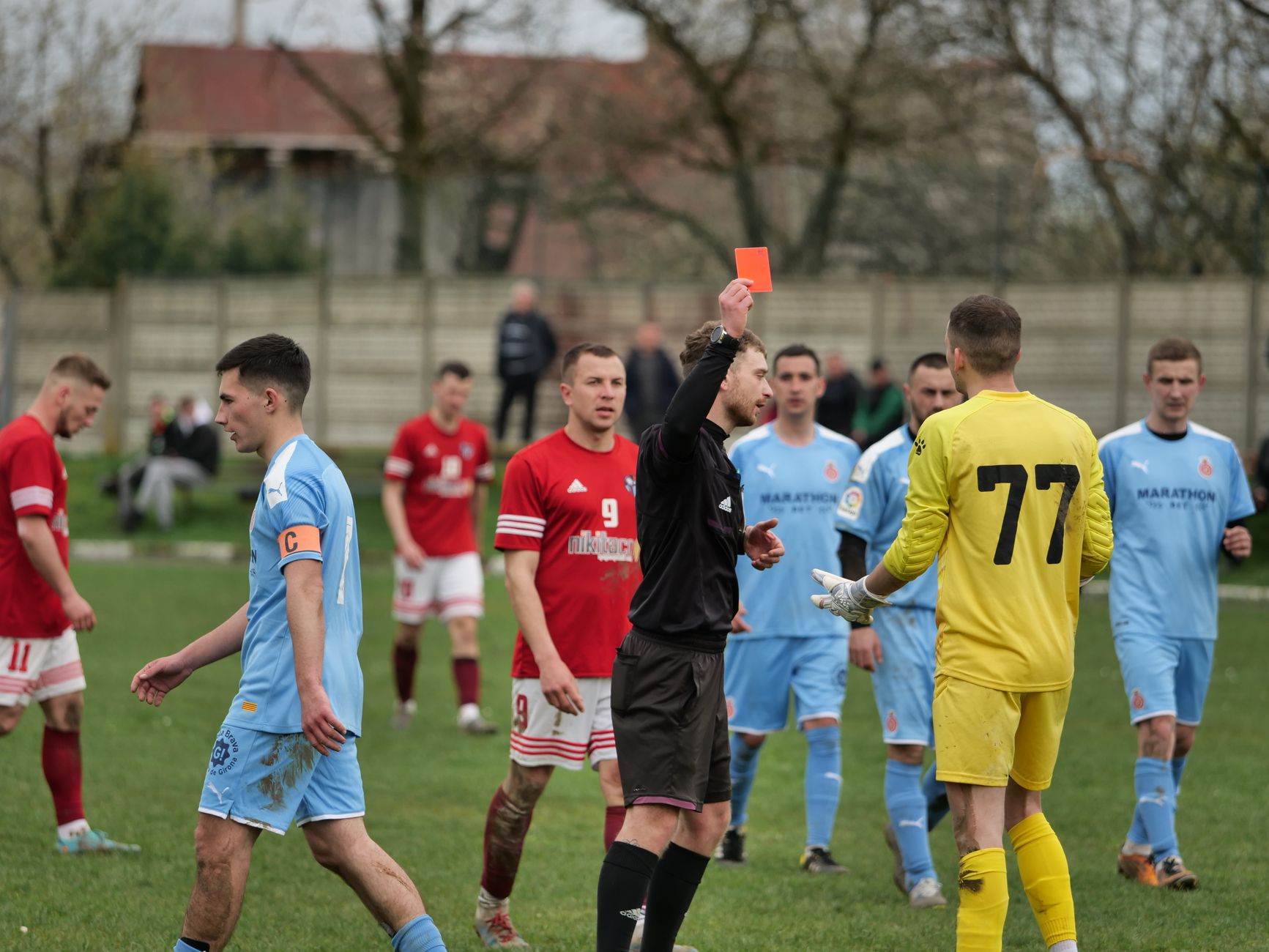
Photo by Володимир Король on Pexels
Want the complete officiating picture before the next big fixture?
Is VAR really designed to eliminate referee errors?
VAR is designed to correct clear and decisive officiating mistakes, not to eliminate every error or create perfectly unanimous decisions. The International Football Association Board, or IFAB, limits reviews to four match-changing categories and preserves the referee’s final authority.
That distinction is the system’s central mathematical constraint. If every contact, throw-in, or yellow card triggered a review, stoppages would grow rapidly and the marginal benefit would collapse; the expected gain in accuracy would no longer justify the time and disruption. Instead, the Video Assistant Referee automatically checks eligible incidents while play continues whenever possible. The referee makes an initial decision, VAR examines the footage, and the original call survives unless the evidence crosses the “clear and obvious” threshold. According to the IFAB VAR protocol, “the final decision is always taken by the referee,” whether that decision follows private communication or an on-field review.
There is also an important psychological point. VAR does not promise that every supporter will agree with the outcome; it aims to reduce objectively identifiable, high-impact mistakes. A marginal handball may remain debatable because football laws contain interpretation, while a mistaken identity or an attacker being two metres offside is far more measurable. The FIFA Laws of the Game therefore treat VAR as an assistant, not an automated judge. For fans, analysts, and responsible betting readers, this means a review should be interpreted as evidence refinement, not as proof that the first referee was incompetent.
What decisions can VAR review?
VAR can review goals, penalty decisions, direct red-card incidents, and mistaken identity when a clear and obvious error or serious missed incident may have occurred. It cannot normally review ordinary fouls, most second-yellow-card decisions, or tactical disagreements that fall outside those categories.
The reviewable categories operate as a strict filter:
- Goal or no goal: VAR checks offside, attacking fouls, handball, and other infringements in the attacking phase leading to a goal.
- Penalty or no penalty: VAR examines whether a punishable offence occurred inside the penalty area and whether the original decision was materially wrong.
- Direct red card: VAR can assess serious foul play, violent conduct, spitting, biting, or other sending-off offences, but not a clearly incorrect second caution.
- Mistaken identity: VAR helps identify the correct player when the referee has cautioned or dismissed the wrong person.
The exact review window is also governed by the Laws of the Game. A team cannot demand an unlimited historical audit of the match, and the referee cannot usually restart a review after play has restarted, except for narrow cases such as mistaken identity or certain violent-conduct incidents. This is why the stadium screen may show a replay that appears relevant while the referee still cannot legally act on it.
How does VAR handle an offside decision?
VAR handles offside by synchronizing camera footage with the moment of the relevant pass, identifying the attacker’s legal body position, and applying calibrated lines or semi-automated technology where available. The final decision still depends on the Laws of the Game and the referee team’s interpretation of active involvement.
Offside is where technology looks most scientific and still produces the loudest arguments. The key is identifying the correct instant: the frame when a teammate plays or touches the ball. Analysts then compare the attacker’s playable body parts with the second-last opponent and the ball, excluding the hands and arms. If the attacker is beyond the offside line and becomes involved in active play, the goal may be disallowed; if the positions are level, the player is not offside.
Semi-Automated Offside Technology, used by FIFA in major competitions, can accelerate this process through synchronized cameras and player-tracking data. However, the technology does not independently decide every event. Human officials validate the kick point, assess interference with an opponent, and determine whether a deliberate play by a defender resets the phase. This creates a crucial information gain: a graphic line is not the whole judgment. The line answers position; the referee team still answers involvement, deliberate play, and the legal phase of attack.
A practical viewing tip is to separate three probabilities:
- Position probability: Was a relevant body part beyond the line?
- Timing probability: Was the correct touch frame selected?
- Involvement probability: Did the player interfere with play or gain an advantage?
Only when all relevant conditions are satisfied should an offside conclusion follow. For deeper tournament analysis, see our [Internal Link: FIFA World Cup 2026 offside technology guide].
At roughly one-third of the match-analysis journey, the smartest move is understanding the technology’s boundaries.
What about penalties, handballs, and goalkeeper movement?
Penalty reviews examine whether a punishable offence occurred inside the penalty area, while handball decisions require interpretation of arm position, movement, distance, and the player’s action. Goalkeeper movement during a penalty kick can also be reviewed when the infringement materially affects the kick’s outcome.
Penalty incidents generate the highest emotional volatility because the expected-goal value of a spot kick is substantial. In elite football, a penalty commonly produces a scoring probability around 0.75 to 0.80, although the exact rate varies by league, taker, goalkeeper, and match context. That is why VAR prioritizes penalty/no-penalty incidents: correcting one can change the scoreline more dramatically than correcting a free-kick location 25 metres from goal. Still, VAR does not award a penalty merely because contact exists; the contact must meet the relevant foul standard.
Handball is more complicated. The official assesses whether the ball touched the hand or arm, whether the arm made the body unnaturally bigger, whether the player deliberately moved toward the ball, and whether a goal was scored immediately after an attacking handball under the applicable law. Slow motion can clarify contact but distort speed and force, so real-time footage often remains valuable. This is one reason the referee may view the incident at normal speed before considering slower angles.
For goalkeeper encroachment, the review is not an invitation to replay every missed movement. VAR focuses on whether the goalkeeper moved off the goal line and saved or materially affected the kick, or whether the kicker infringed. A retake may follow only when the relevant infringement meets the competition’s protocol. In probability terms, VAR weighs both the rule violation and its causal impact on the result.
What about serious red cards and mistaken identity?
VAR can recommend a review for a potential direct red card or mistaken identity, but the on-field referee must make the final decision. A clearly incorrect second yellow card is generally outside VAR’s scope, while violent conduct and serious foul play remain reviewable in defined circumstances.
A direct-red review may involve serious foul play, violent conduct, denial of an obvious goal-scoring opportunity, or offensive conduct such as spitting and biting. The video official first checks whether the incident belongs to the reviewable category, then determines whether the referee missed a dismissal or made a clear error. The referee may accept the information without viewing the monitor for factual matters, but subjective decisions—such as whether force was excessive—often lead to an on-field review.
Mistaken identity is less glamorous but operationally vital. Imagine a crowded confrontation where the referee sees an offence, reaches for a card, and identifies the wrong player. VAR can establish who committed the offence, protecting both disciplinary accuracy and match integrity. The correction may occur even when the original incident is not otherwise reviewed for its severity.
The protocol also contains an edge case that many casual explanations omit: if play continues after a reviewable incident, later disciplinary action is not automatically erased when the original call changes. For example, a player who stops a promising attack may still receive the relevant sanction even if VAR subsequently changes the restart. The system corrects the central decision; it does not rewind every consequence generated during the intervening seconds. That operational detail matters when interpreting match reports and post-match statistics.
[Internal Link: how referees interpret serious foul play]
Where does VAR fail?
VAR fails when video cannot remove ambiguity, when camera coverage is incomplete, when the review threshold is misunderstood, or when human interpretation remains divided. It also creates delays, communication problems, and fan confusion when officials do not explain the reasoning clearly.
The first limitation is epistemic: video supplies evidence, not perfect truth. A camera angle can hide contact; frame rates can make a challenge appear more sudden; compression can blur the exact point of touch; and a calibrated line can be affected by the chosen kick frame. A useful practitioner-level observation is that disagreement often arises not from the line itself but from selecting the event that the line is supposed to measure. If the wrong touch is chosen, every subsequent geometric calculation is precise but irrelevant.
The second limitation is legal. VAR cannot expand its jurisdiction simply because supporters are angry. The system does not normally review corners, throw-ins, ordinary yellow cards, or an earlier foul that falls outside the permitted attacking phase. IFAB states that “the referee must always make a decision,” meaning the match cannot be paused indefinitely while officials search for a call that was never made. The referee may allow play to continue, but that continuation is itself the initial decision.
The third limitation is time. IFAB imposes no universal maximum review duration because accuracy takes priority, yet long checks damage rhythm and generate uncertainty. Competitions may improve transparency through referee announcements, stadium graphics, and clearer audio protocols, but technology cannot manufacture consensus. My contrarian conclusion is blunt: VAR is most successful when it corrects a high-impact factual error in under two minutes; it is least persuasive when it turns a subjective judgment into a prolonged courtroom drama.
For fans evaluating a disputed call, use this checklist:
- Was the incident one of the four review categories?
- Did the referee make an initial decision?
- Is the evidence factual or interpretive?
- Was play restarted before the review?
- Did the footage clearly exceed the “clear and obvious error” threshold?

Photo by Ben Khatry on Pexels
Want to compare controversial calls without relying on social-media outrage?
Should you trust VAR during FIFA World Cup 2026?
You should trust VAR as a structured error-reduction tool during FIFA World Cup 2026, but not as an infallible authority. Its strongest value lies in objective, high-impact facts such as offside position, mistaken identity, and whether a serious incident occurred; its weakest area is subjective interpretation of contact and intent.
FIFA’s tournament model combines referee crews, video assistant referees, replay operators, communications systems, and competition-specific technology standards. The likely presence of semi-automated offside support means decisions can be processed faster than in earlier VAR implementations, but “faster” does not mean instantaneous. Stadium viewers may still wait while officials validate the kick point, player positions, interference, and the legal phase of play.
For match prediction, VAR should be included as a scenario variable rather than treated as a random nuisance. A team that relies on aggressive high pressing may create more offside events; a defender who repeatedly dives into the box increases penalty exposure; a goalkeeper with marginal positioning habits carries retake risk. Coach's Corner can use those patterns in tactical previews, but responsible readers should never convert officiating uncertainty into guaranteed betting outcomes. Odds already reflect broad historical assumptions, while a single review remains a low-frequency, high-impact event.
The best workflow is evidence-first:
- Record the original referee decision.
- Classify the incident under the IFAB protocol.
- Identify whether the question is factual or subjective.
- Check the review outcome and restart.
- Update the match narrative without pretending certainty.
[Internal Link: FIFA World Cup 2026 match predictions]
Ultimately, VAR has not removed drama; it has relocated drama into evidence, timing, and interpretation. The rational fan accepts that perfection is impossible, then demands consistency, transparency, and correct application of the Laws of the Game. That is a far better standard than expecting technology to make football emotionally painless (and honestly, football was never built for emotional peace). Before judging a review, ask what the officials were legally allowed to inspect, what the footage actually proved, and whether the decision changed a match-critical event.

Photo by El gringo photo on Pexels
Ready to follow the 2026 tournament with sharper tactical and officiating analysis?
[Internal Link: complete FIFA World Cup 2026 tournament coverage]
Frequently Asked Questions
Q: What is VAR in football?
A: VAR is a Video Assistant Referee system that checks potentially decisive football incidents using live video and replays. It supports the on-field referee in four categories: goal or no goal, penalty or no penalty, direct red cards, and mistaken identity. The VAR is an appointed match official, not an independent replacement referee. Under the IFAB protocol, only the referee can initiate a formal review and the referee always makes the final decision.
Q: How does VAR work step by step?
A: VAR works by automatically checking eligible incidents, identifying a possible clear and obvious error, communicating evidence to the referee, and supporting either a remote decision or on-field review. The referee first makes an initial decision, while the VAR examines synchronized camera angles and relevant replays. If the evidence does not clearly justify intervention, the original decision remains; if it does, the referee may review the monitor and announce the final outcome.
Q: What is the difference between VAR and the referee?
A: The referee controls the match and owns the final decision, while VAR reviews video and recommends intervention when a serious error may have occurred. VAR cannot independently overturn a decision, award a penalty, or send off a player without the referee’s authority. This division preserves on-field accountability while using technology to improve evidence quality in high-impact situations.
Q: Why does VAR sometimes take so long?
A: VAR takes longer when officials must determine the correct incident, synchronize the relevant frame, assess multiple camera angles, and apply a subjective law. Offside checks may require confirmation of the pass moment and player involvement, while handball and red-card reviews require interpretation of intent, force, or impact. IFAB does not impose a universal review time limit because accuracy is prioritized over speed, although competitions continue seeking faster communication.
Q: Can VAR overturn a yellow card?
A: VAR generally cannot overturn an ordinary yellow card or a clearly incorrect second yellow card. It can intervene when an incident may justify a direct red card, including serious foul play or violent conduct. If the referee mistakenly identifies the wrong player, VAR can correct the identity even when the disciplinary consequence involves a caution or sending-off.
Q: Can VAR review an incident after play restarts?
A: VAR normally cannot review an incident after play has stopped and restarted, except for narrow cases such as mistaken identity or certain sending-off offences involving violent conduct, spitting, biting, or extremely abusive actions. This restriction protects the continuity of the match and prevents unlimited retrospective reviews. Fans should therefore distinguish between a missed review during the legal window and a later replay that officials are no longer permitted to use.
Q: Does VAR make football completely fair?
A: VAR makes major factual errors less likely, but it cannot make football completely fair or eliminate interpretation. Camera coverage may be imperfect, frame selection can be disputed, and laws concerning handball, force, or interference still require human judgment. The most reliable expectation is measurable improvement in decisive decisions, not unanimous agreement or a mathematically perfect match.
Thank you for reading this dispatch.
Coach's Corner · The Digital Broadsheet · Issue No. 001